
If there’s one thing trending in health right now, it’s this:
People are finally questioning what they’ve been told to “just live with.”
And honestly?
It’s about time.
At Uncommon Physical Therapy, we see it every week — motivated, intelligent people who assumed pain, stiffness, or limited mobility was just the cost of being active, busy, or human. This month, we want to clear the air, bust a few myths, and give you tools you can actually use to feel better long-term.
A Word From Our Owner
“Most people don’t need more toughness — they need better information.
When you understand how your body actually works, pain stops feeling inevitable and starts feeling solvable.”
— Davis Bradley, Owner | Uncommon Physical Therapy
That belief is at the core of everything we do: empower people with clarity, confidence, and a plan that actually works.

Trending Misconception #1: Pain Means Damage
This one is everywhere — and it’s one of the biggest reasons people stay stuck.
Truth:
Pain does not always mean something is damaged or broken.
Pain is your nervous system’s alarm system. Sometimes it’s responding to real tissue irritation. Other times, it’s reacting to stress, overload, poor movement patterns, or long-standing habits that your body no longer tolerates.
That’s why:
- imaging doesn’t always match symptoms
- rest alone often doesn’t fix the problem
- movement (done correctly) is often the solution
Understanding why something hurts is far more powerful than just trying to silence it.

Trending Misconception #2: Stretching Fixes Everything
Stretching is having a moment — and while we’re fans, it’s not the magic fix social media makes it out to be.
Stretching helps when:
- muscles are truly short or stiff
- it’s paired with strength and control
- it supports better movement patterns
Stretching doesn’t help when:
- the issue is weakness or poor joint stability
- nerves are involved
- movement mechanics are the real problem
If stretching hasn’t helped your pain yet, that doesn’t mean your body is stubborn — it means the strategy likely needs to change.
Trending Misconception #3: “I’ll Go to PT If It Gets Worse”
This is one we hear all the time.
Here’s the reality:
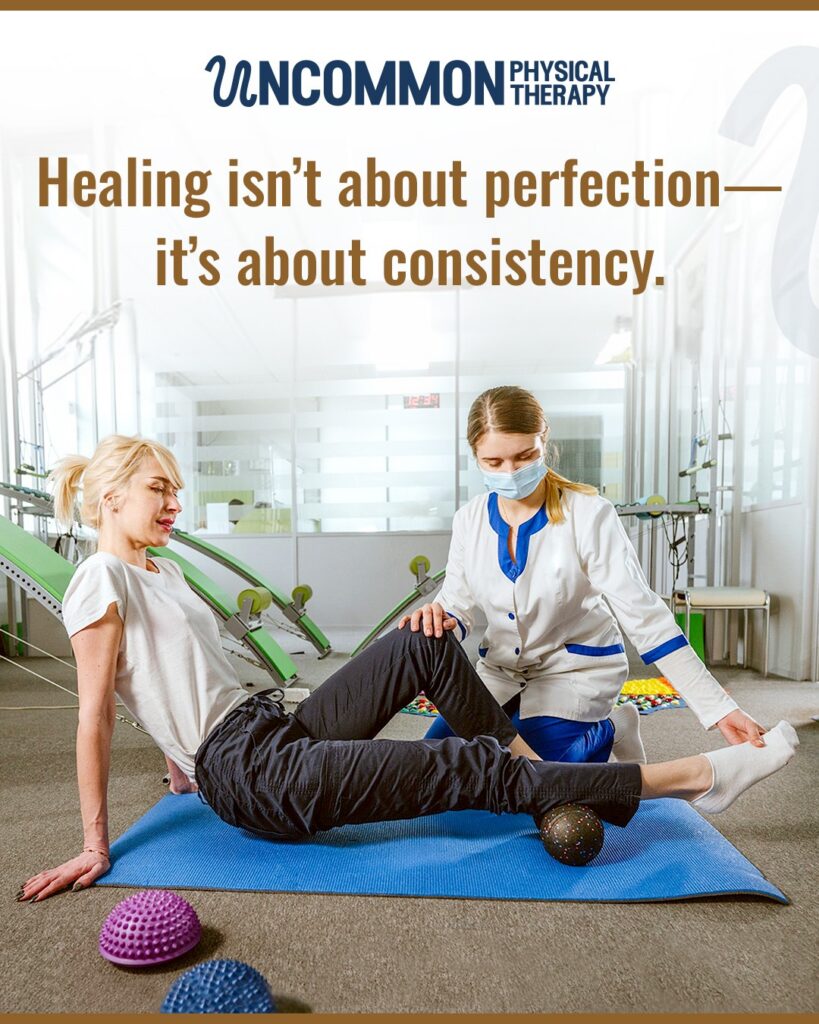
Physical therapy is most effective when it’s proactive, not reactive.
Waiting until pain becomes severe often means:
- more compensation patterns
- longer recovery timelines
- more frustration
The earlier movement issues are addressed, the easier they are to resolve — and the faster you get back to doing what you love.
3 Simple, High-Impact Health Tips You Can Use This Month
These aren’t trendy — they’re effective.
1. Move Daily, Even on “Off” Days
Movement doesn’t need to be intense to be beneficial.
Walking, gentle mobility work, or light strength keeps your nervous system calm and your joints nourished.
2. Don’t Ignore One-Sided Tightness or Pain
Pain that consistently shows up on one side is often a clue — not something to stretch harder and hope away.
3. Strength Is Protective
Muscles aren’t just for performance — they protect joints, absorb stress, and keep pain away.
Strength training, when individualized, is one of the best long-term investments in your health.
Why This Matters to Our Members
At Uncommon Physical Therapy, we don’t believe in generic fixes or rushed visits. We believe your time, effort, and health deserve respect.
That’s why every visit includes:
- meaningful one-on-one care
- evidence-based treatment
- education you can actually apply
- and a plan built around your goals
You’re not just here to feel better for a week — you’re here to move better for years.
This Month’s Takeaway
Pain is not your destiny.
Stiffness is not your identity.
And “normal” is often just untreated.
With the right information, guidance, and support, your body is capable of far more than you’ve been led to believe.
And we’d be honored to be part of that journey.
Ready to Move Better This Month?
📍 Uncommon Physical Therapy
6842 Carnegie Blvd, Suite 205
Charlotte, NC 28211
📞 (704) 803-8038
📧 Info@UncommonPhysicalTherapy.com
Uncommon care.
Uncommon results.
Because success should never be average.